 Devroniq Studio
Start a project
Switchyard.
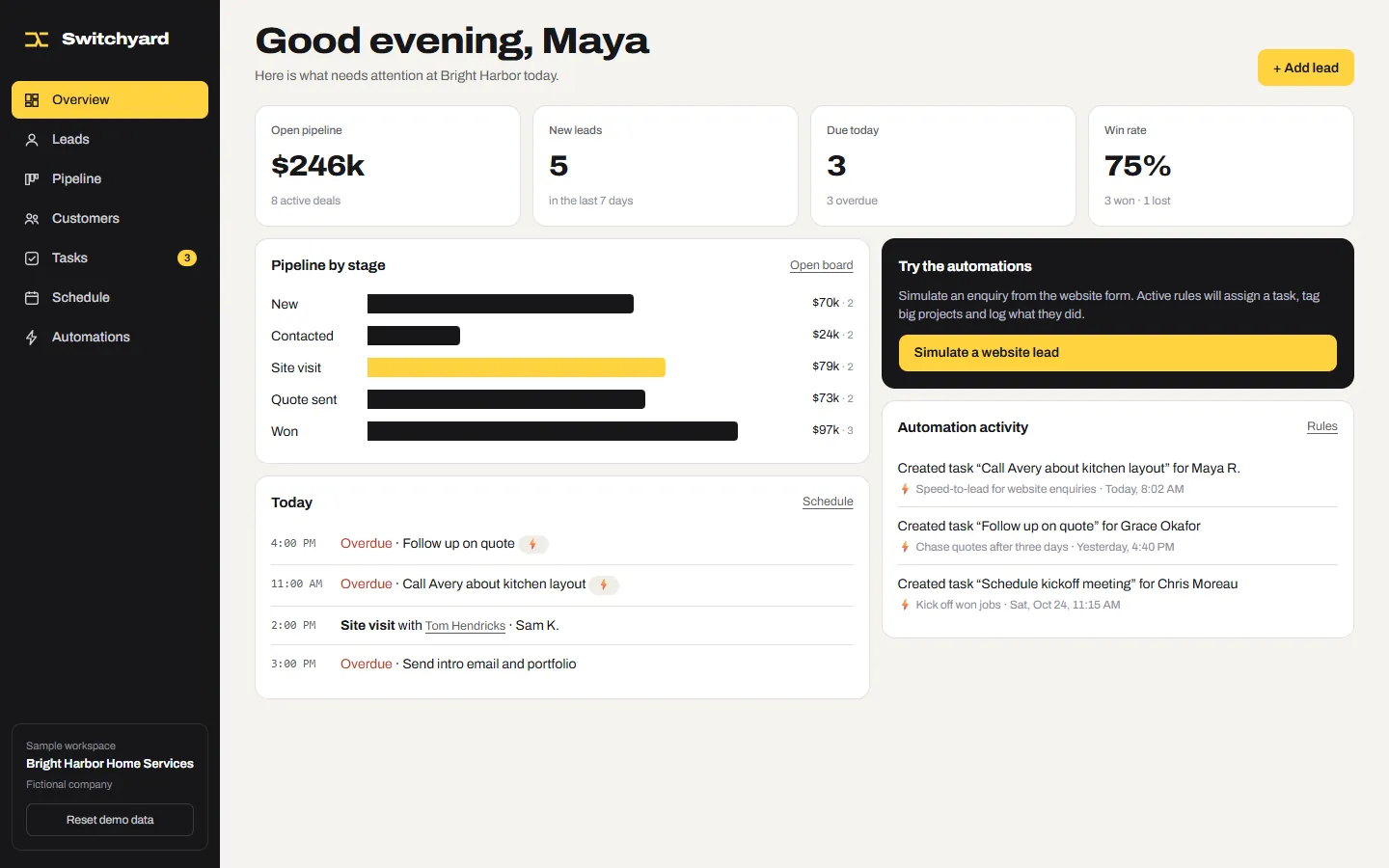
A CRM for a service business where the follow-ups take care of themselves: every lead in one place, a pipeline you can drag, a shared calendar, and plain-language automation rules.
The problem
In a service business, deals are rarely lost to competitors. They’re lost to a call nobody returned.
Enquiries arrive by web form, phone and referral; quotes go out and nobody chases them; site visits live in one person’s calendar. Switchyard imagines a fictional home-services company, Bright Harbor, and shows how one system with simple automations keeps every lead moving.
What it does
- OverviewOpen pipeline, new leads, tasks due today and win rate, plus today’s agenda and the latest automation runs.
- LeadsSearch and filter every enquiry; add new ones; a transparent lead score shows exactly where its points come from.
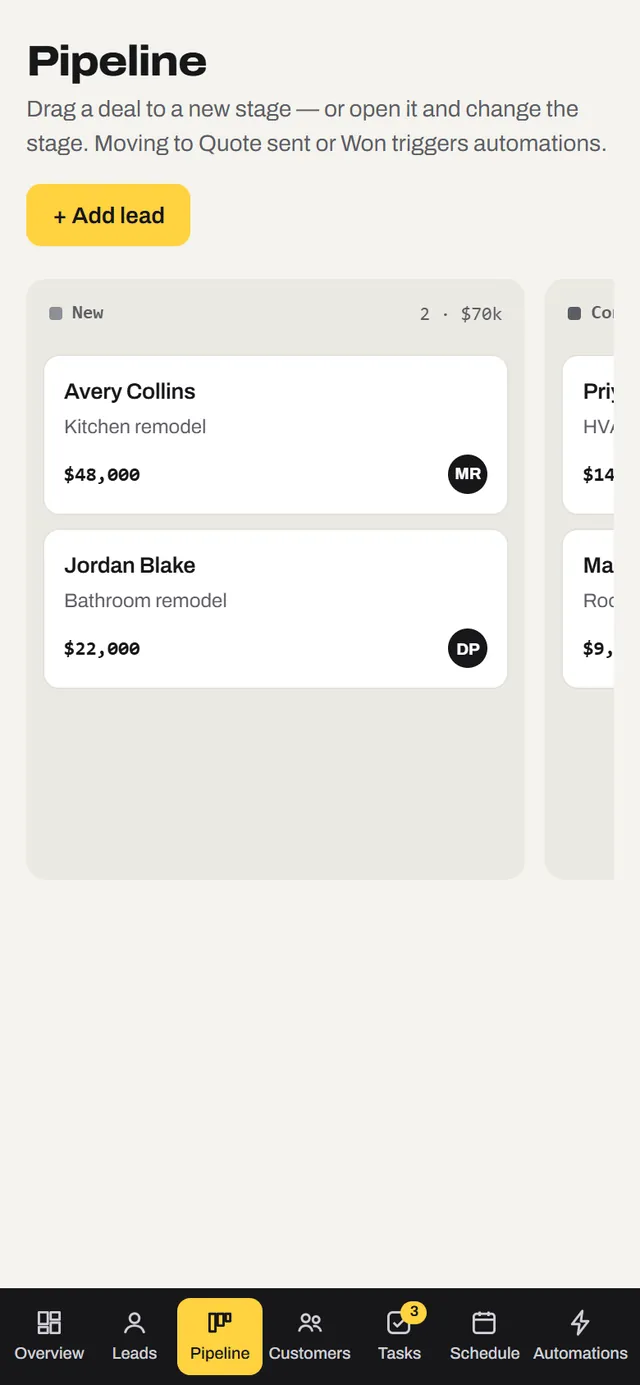
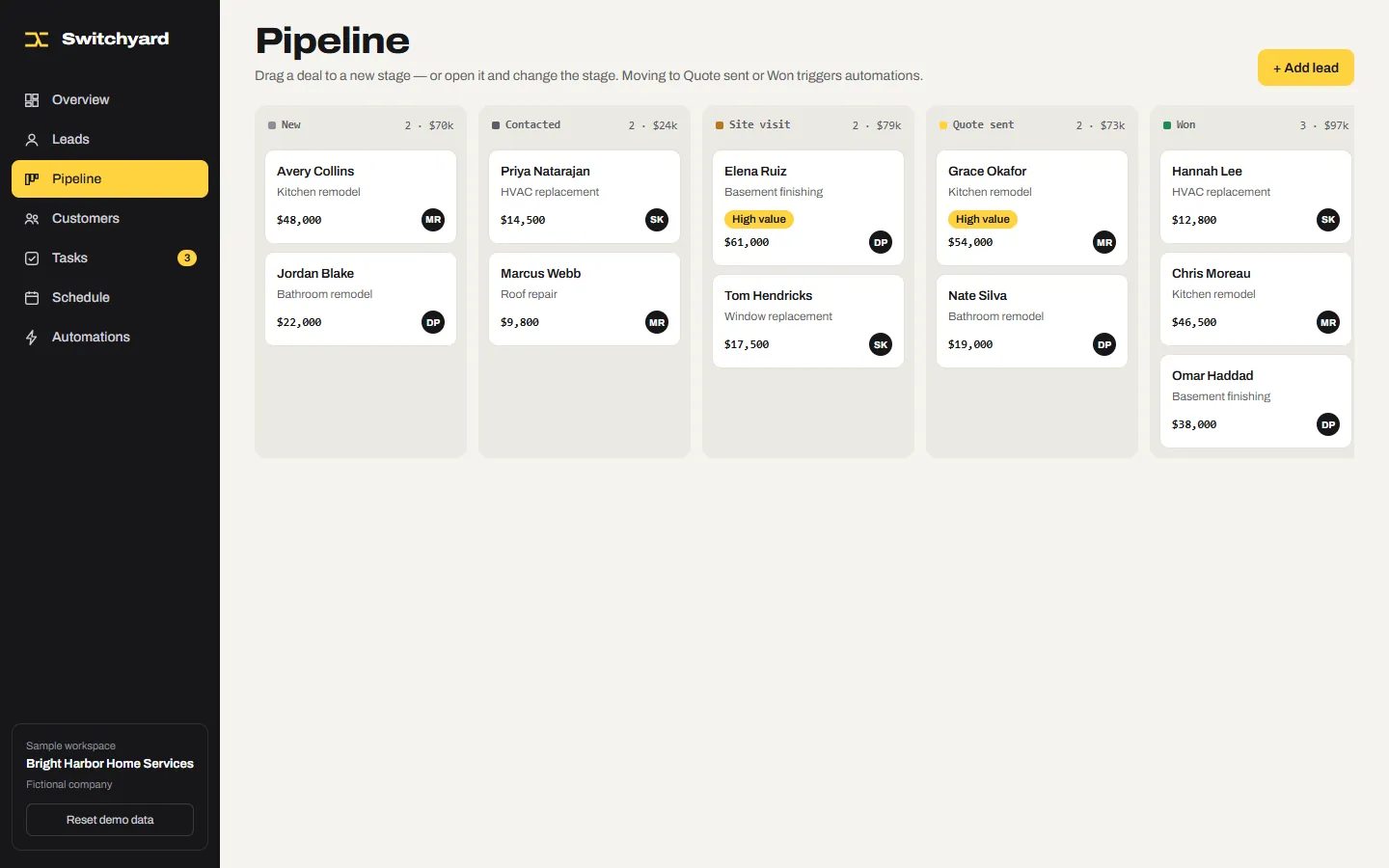
- PipelineDrag deals between six stages, or change the stage from the lead record on touch devices.
- Tasks and scheduleDue-now, upcoming and completed tasks; a seven-day team calendar that blocks double bookings.
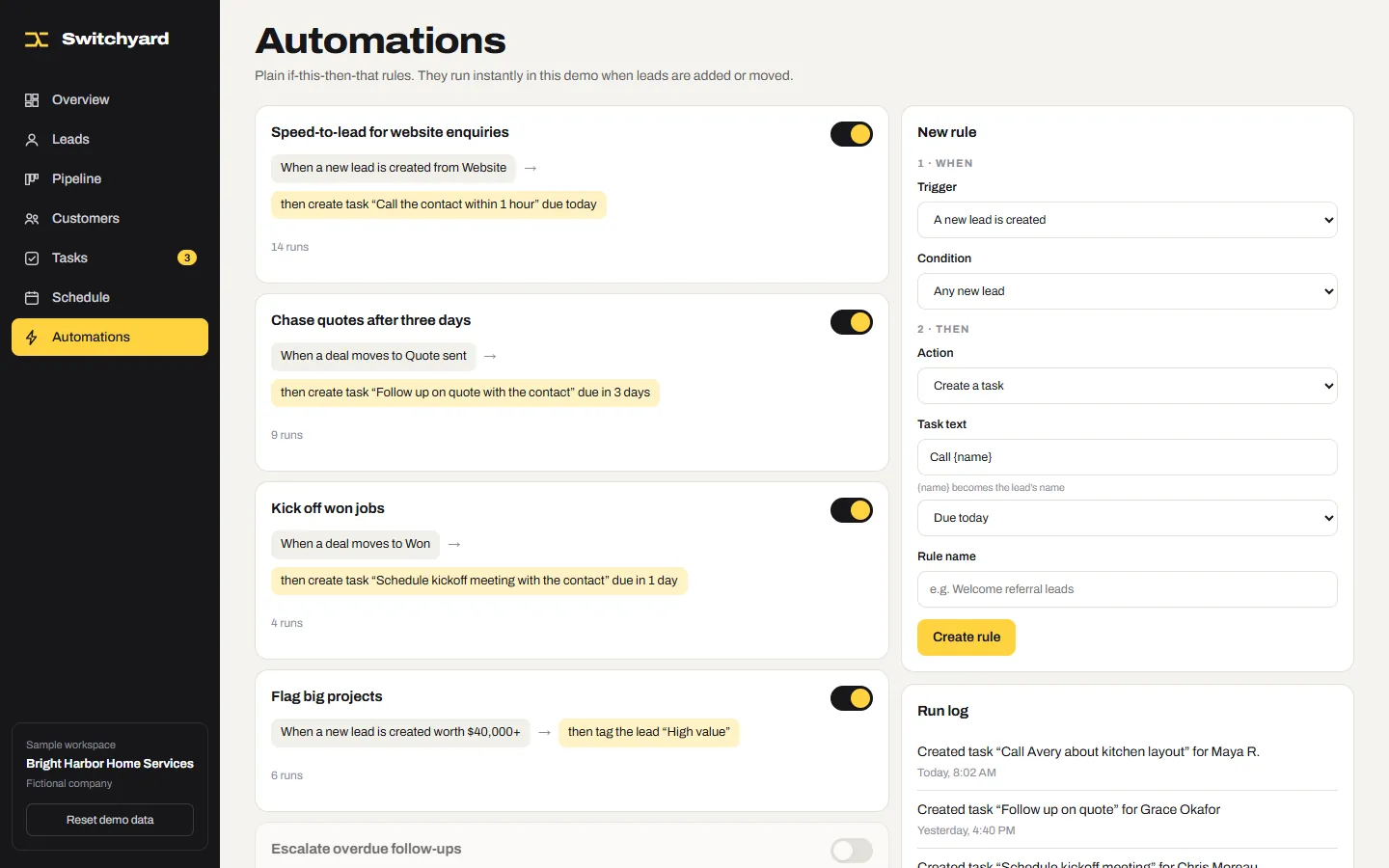
- AutomationsRules such as “when a website lead arrives, create a call task” or “when a quote is sent, follow up in three days” — switchable, editable and logged.
- CustomersWon jobs become customers with their full activity history kept.
Design decisions
Graphite, paper and one signal yellow, set in Archivo with monospaced figures: an interface that feels like a well-run dispatch board. Yellow is reserved for “this needs you” and for automation, so the eye learns where to look.
Automations are written as sentences — “When a new lead is created from Website, then create task…” — because the people who use a CRM shouldn’t need a developer to understand it.
Try it here.
Open full screenHonest notes
- Vanilla JavaScript modules
- Event-driven rule engine
- HTML drag and drop
- localStorage persistence
- Archivo (open-source)