 Devroniq Studio
Start a project
MARGE
App.
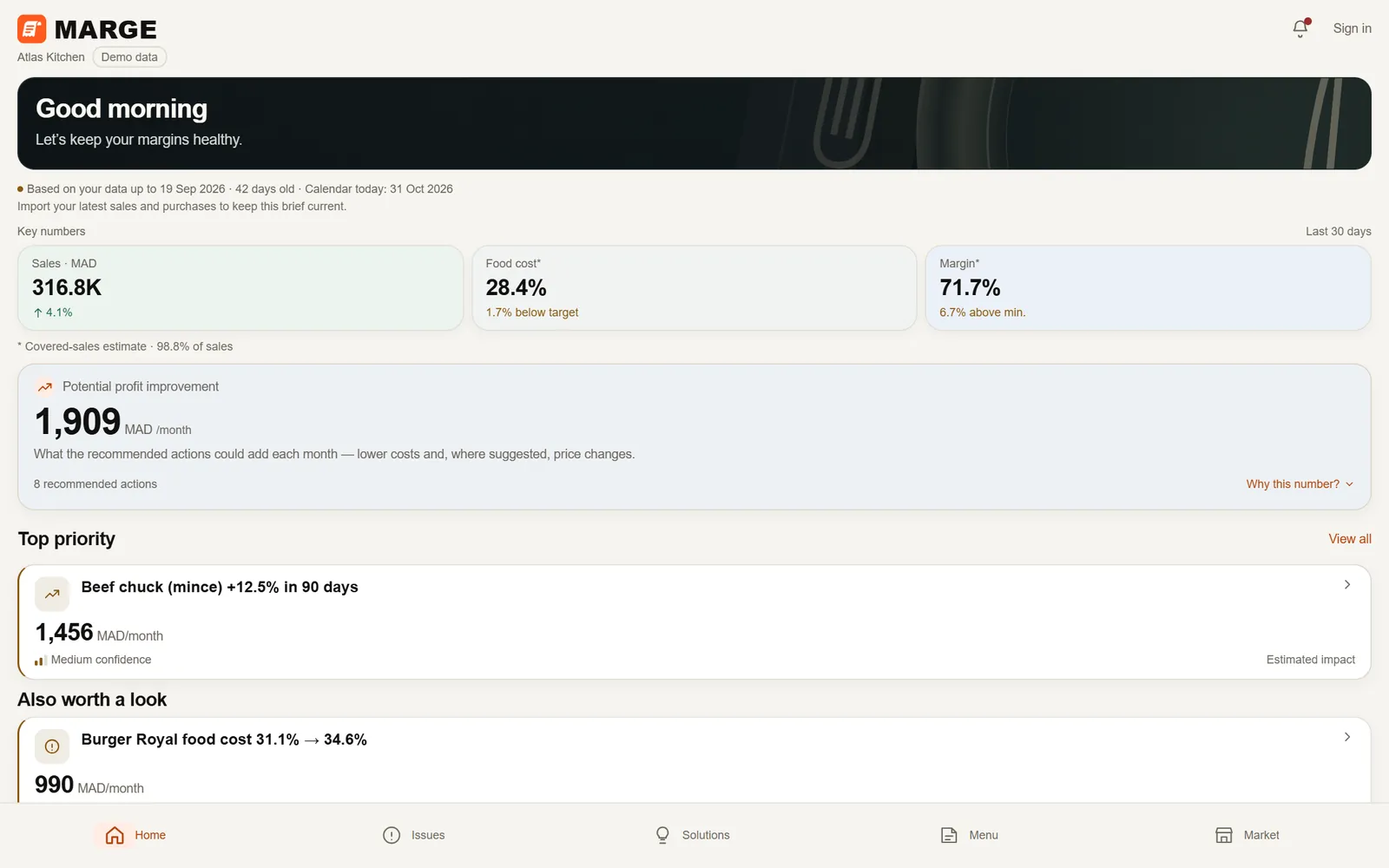
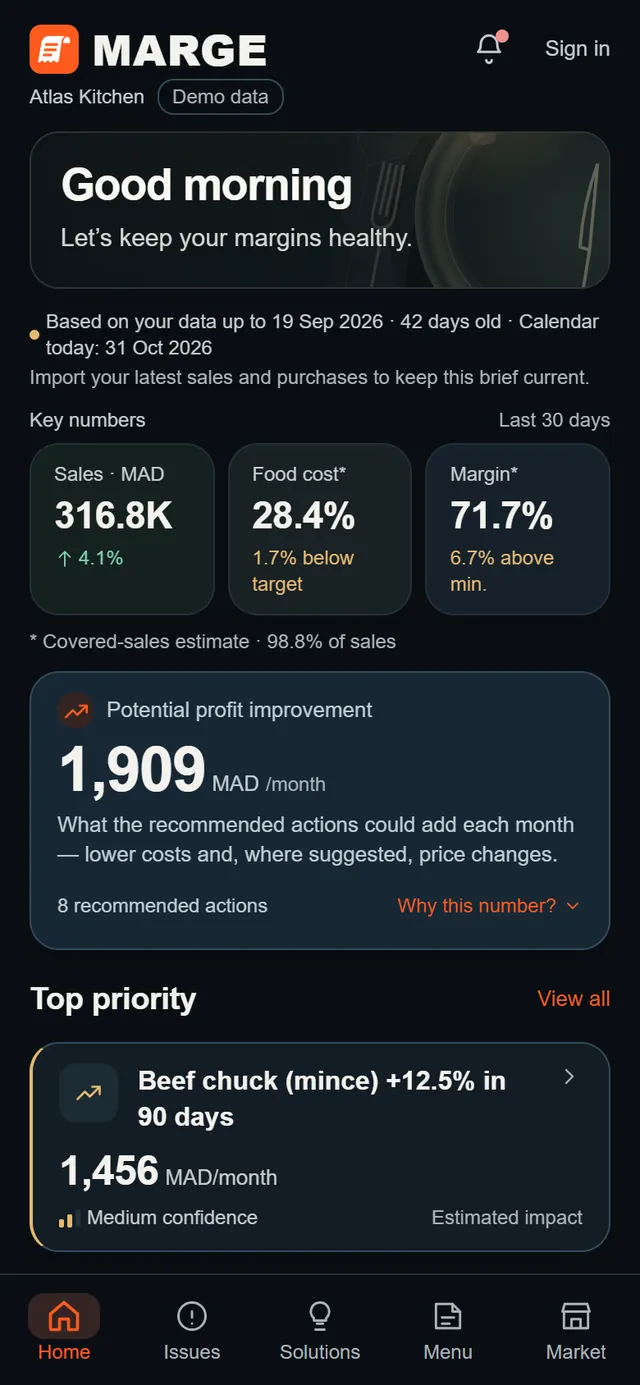
The product itself. MARGE reads the numbers a food business already has — sales, purchases, recipes — finds where margin is leaking, explains why, and puts the decision back in the owner’s hands.
On the sign-in screen, choose “Explore the demo restaurant” — no account needed.
The problem
A busy kitchen can still lose money: a supplier raises a price, a recipe drifts, a menu price stays where it was.
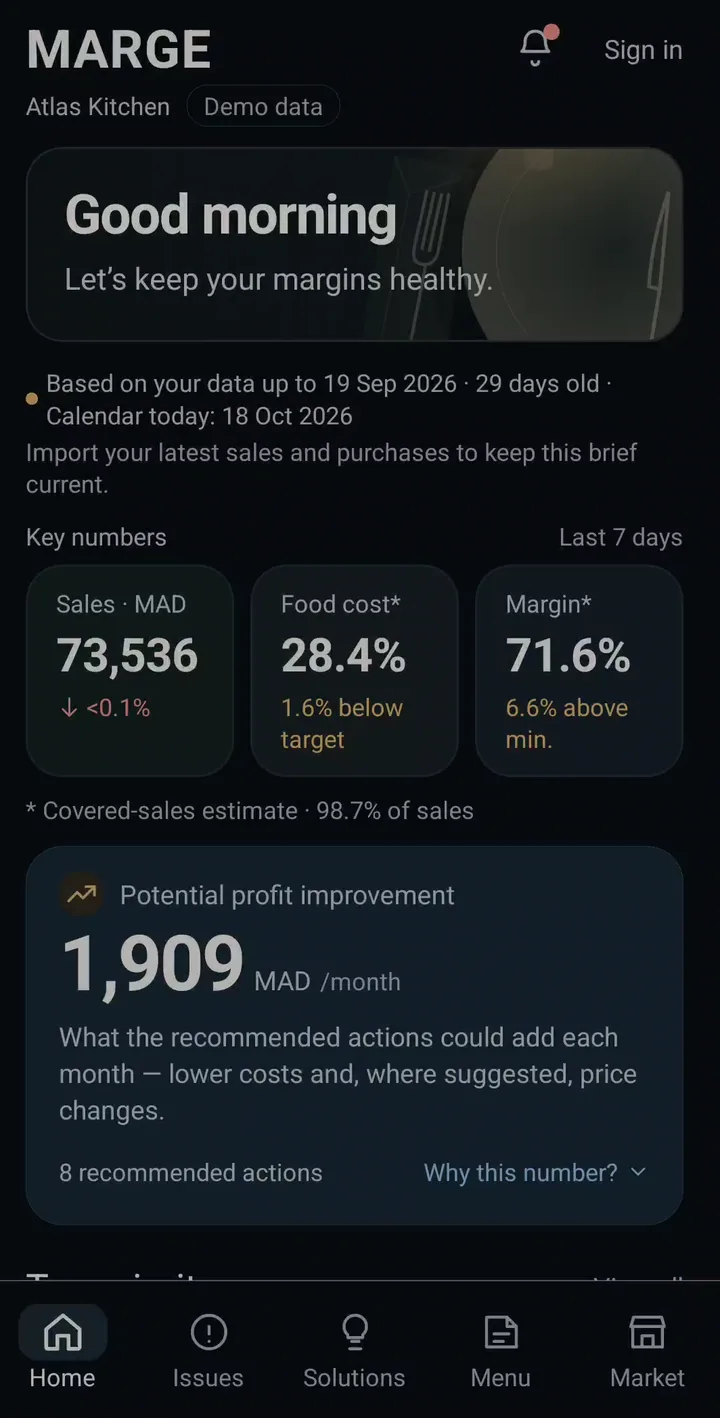
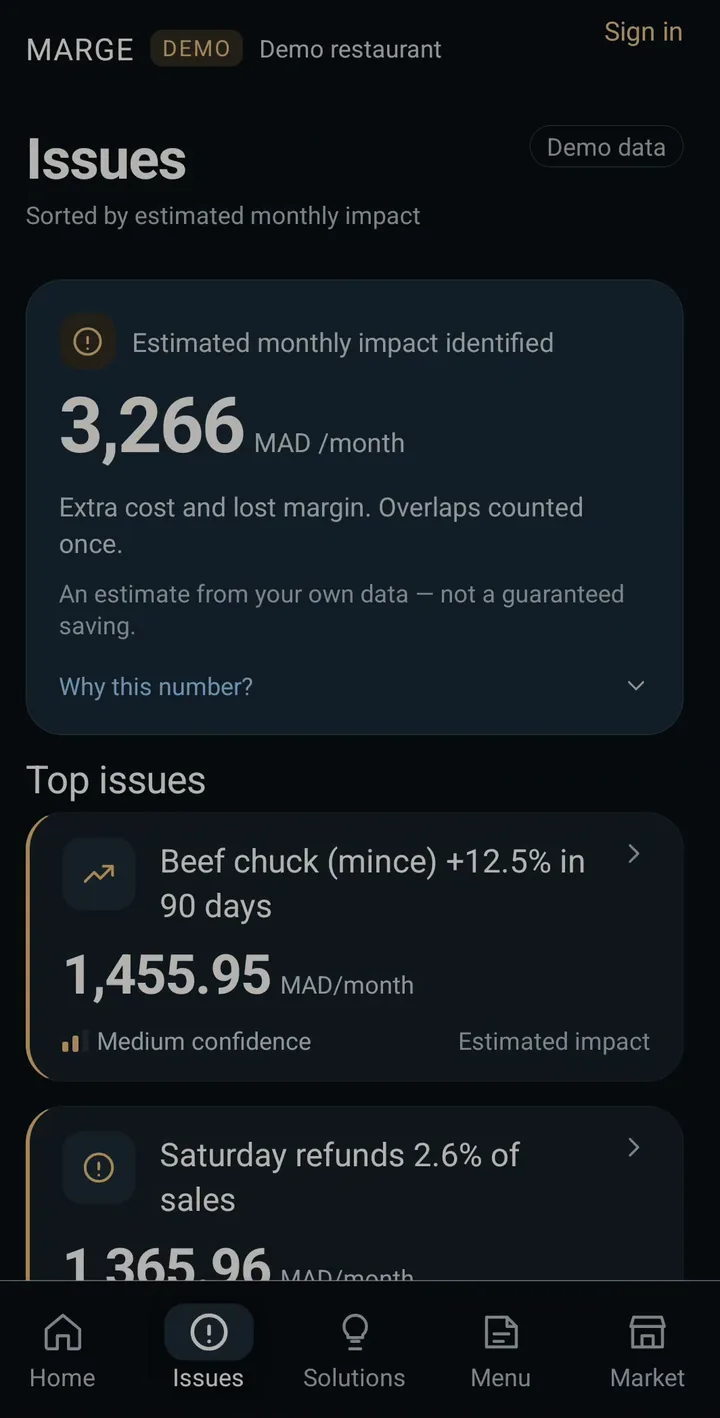
Each of those lives somewhere different — invoices, recipes, the till — so the owner sees the symptom long before the cause. MARGE connects them and turns them into a short, ranked list of things worth acting on, each with its evidence.
The core workflow
From a number to a decision.
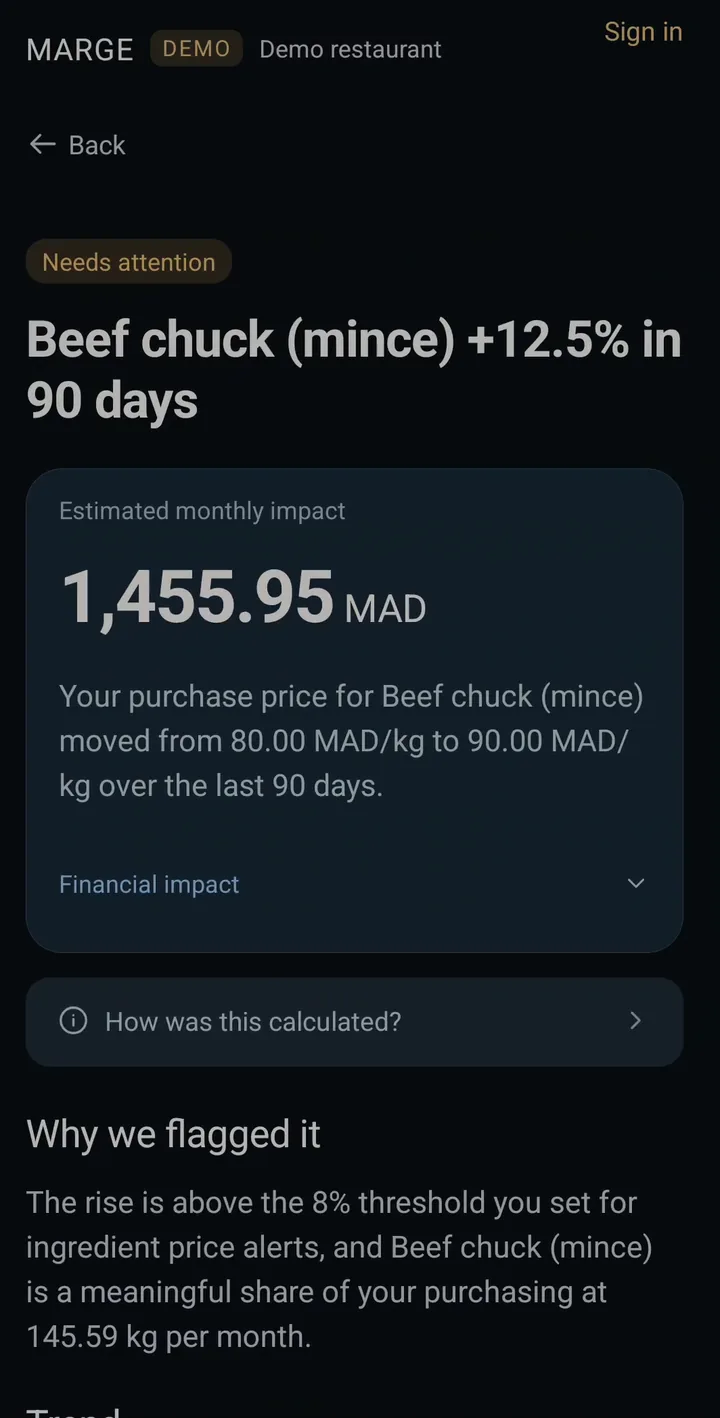
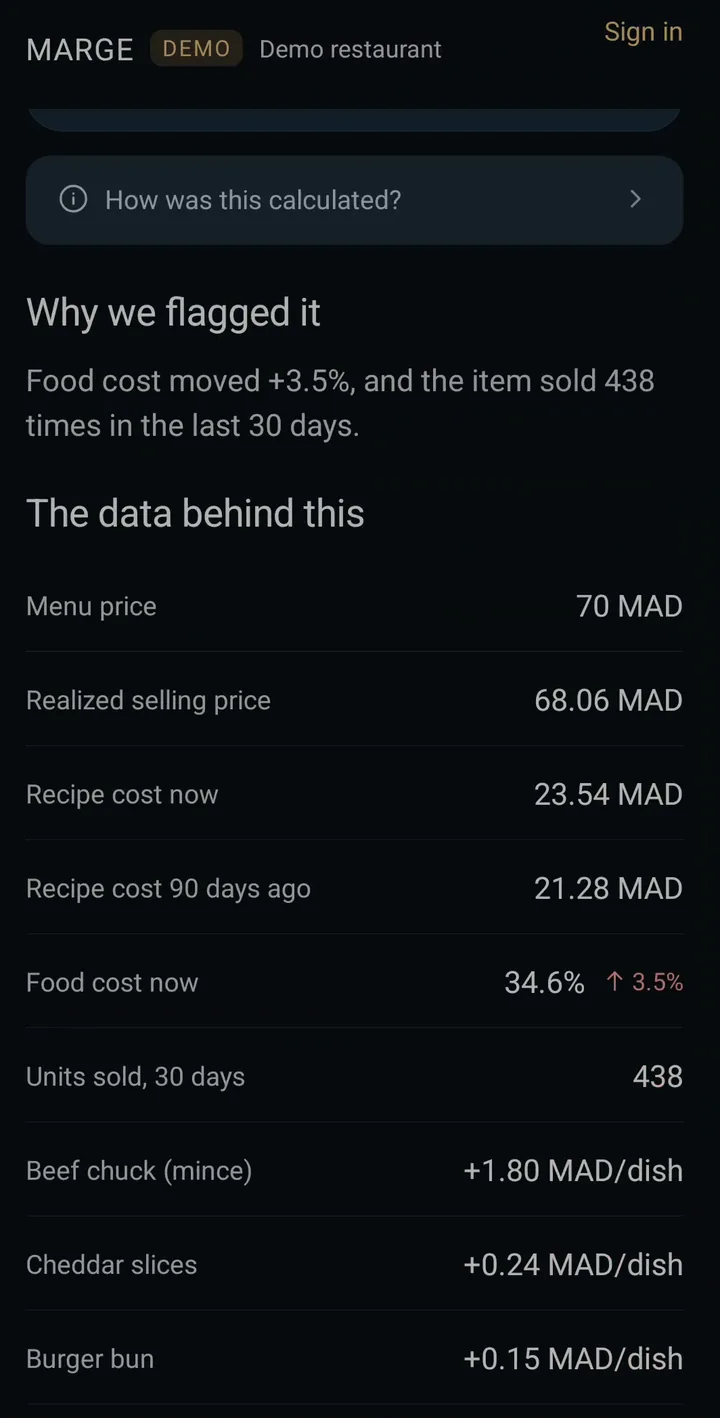
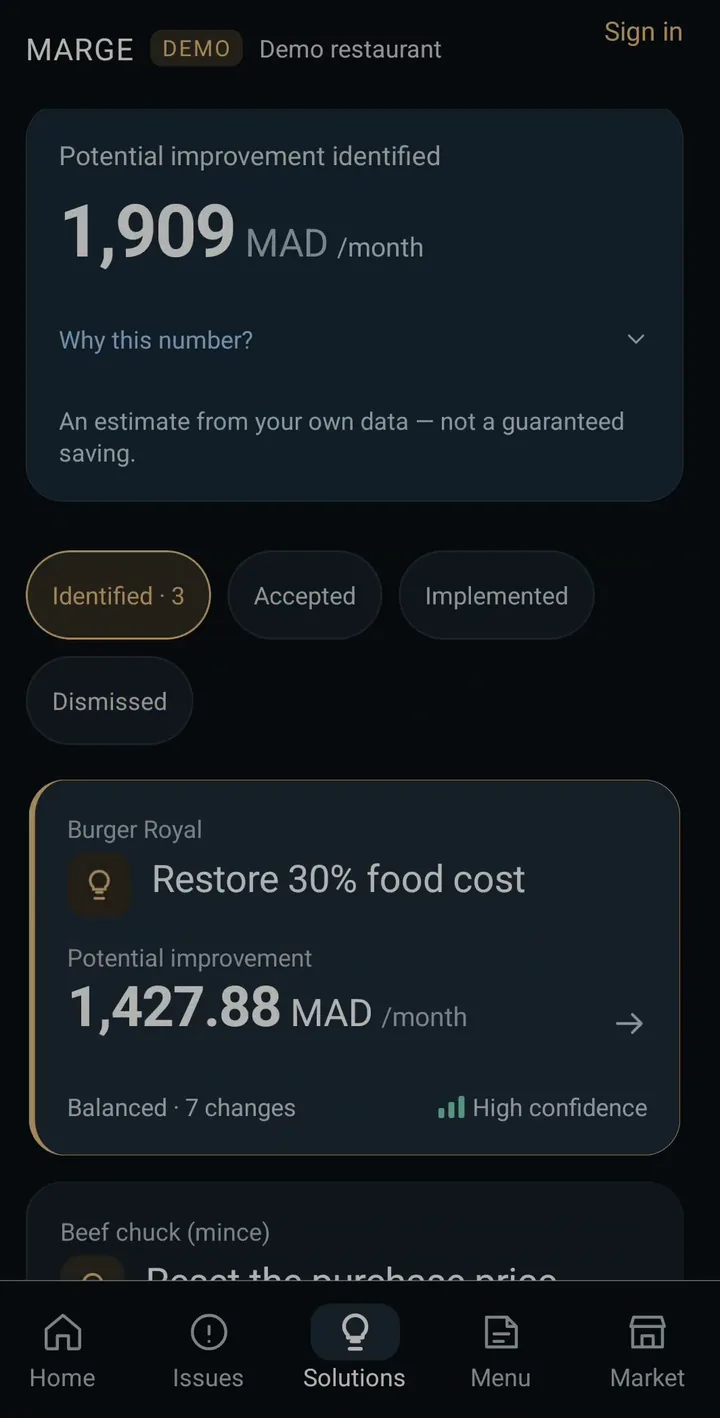
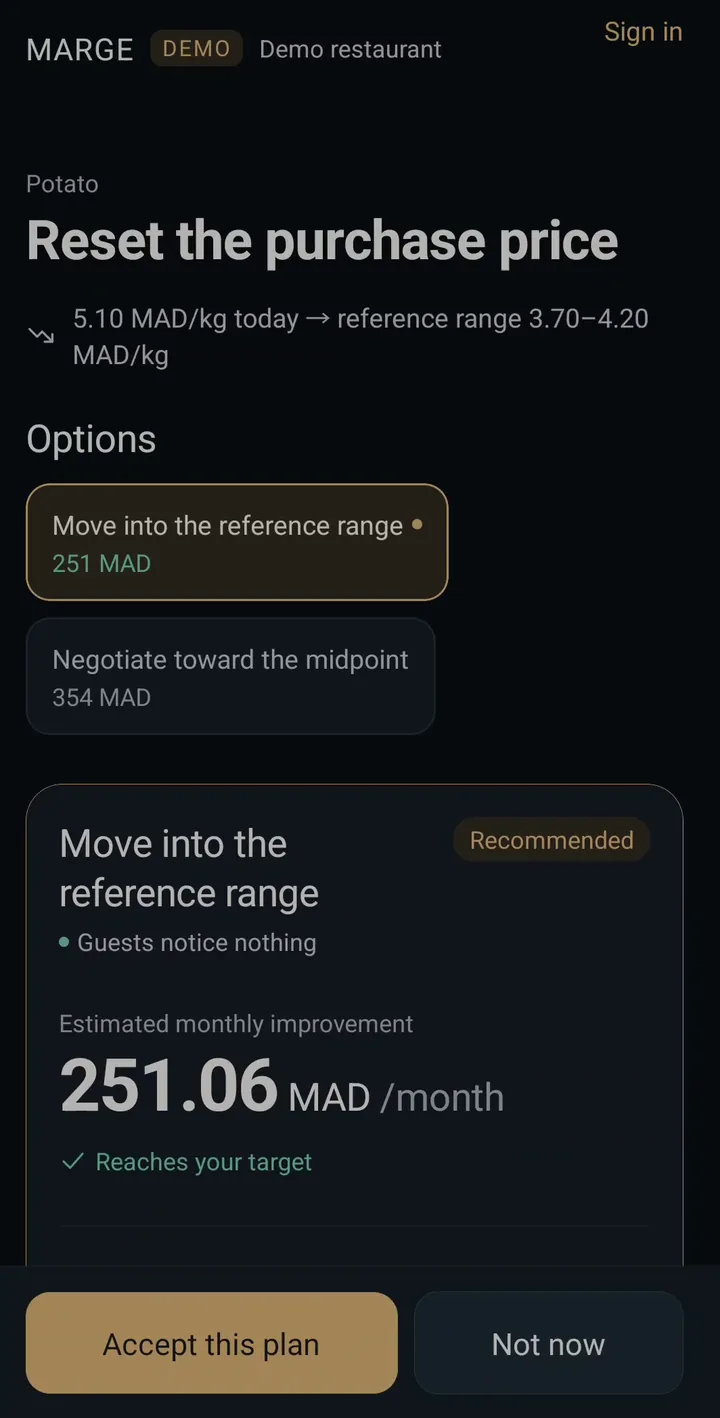
Menu profitability
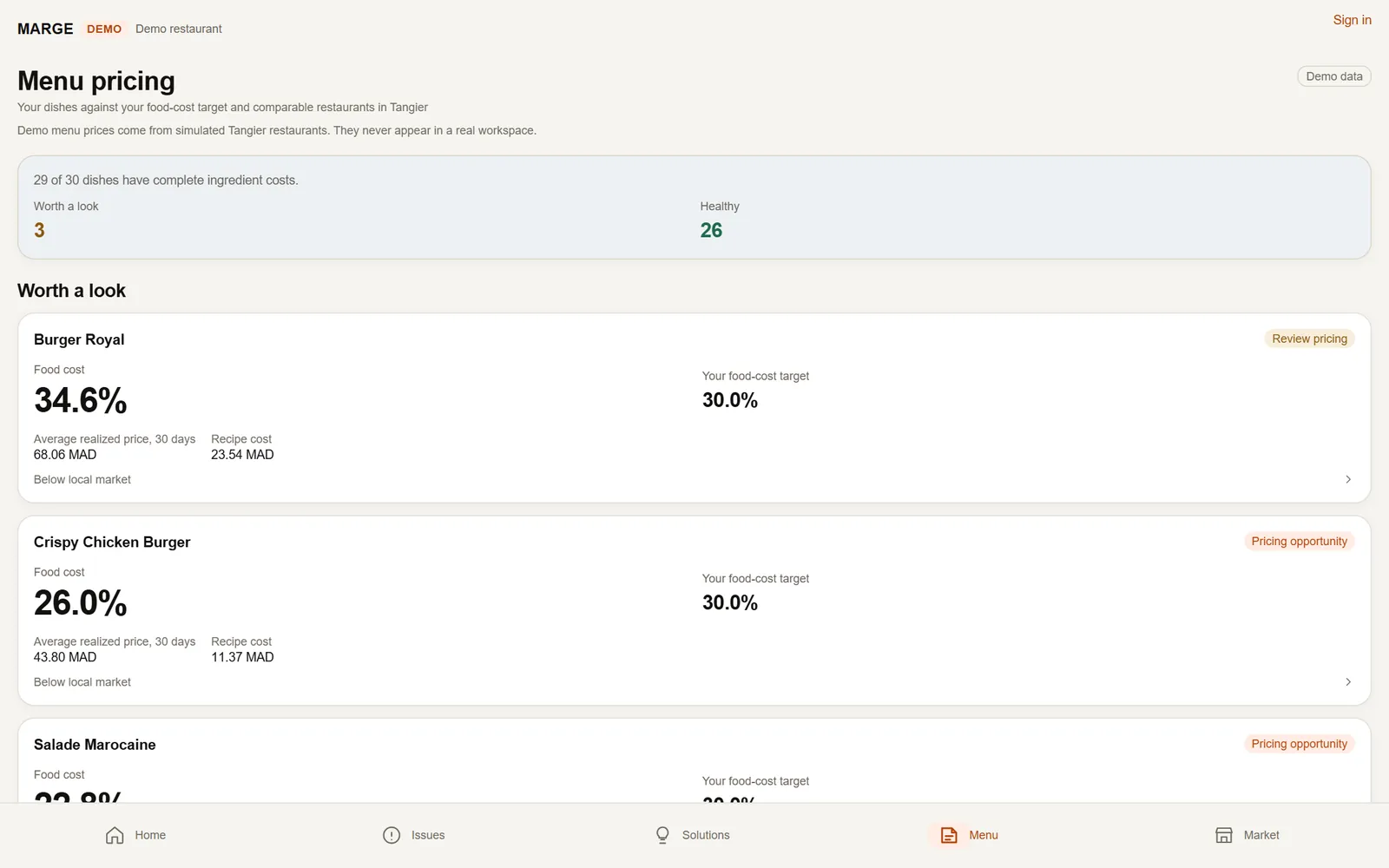
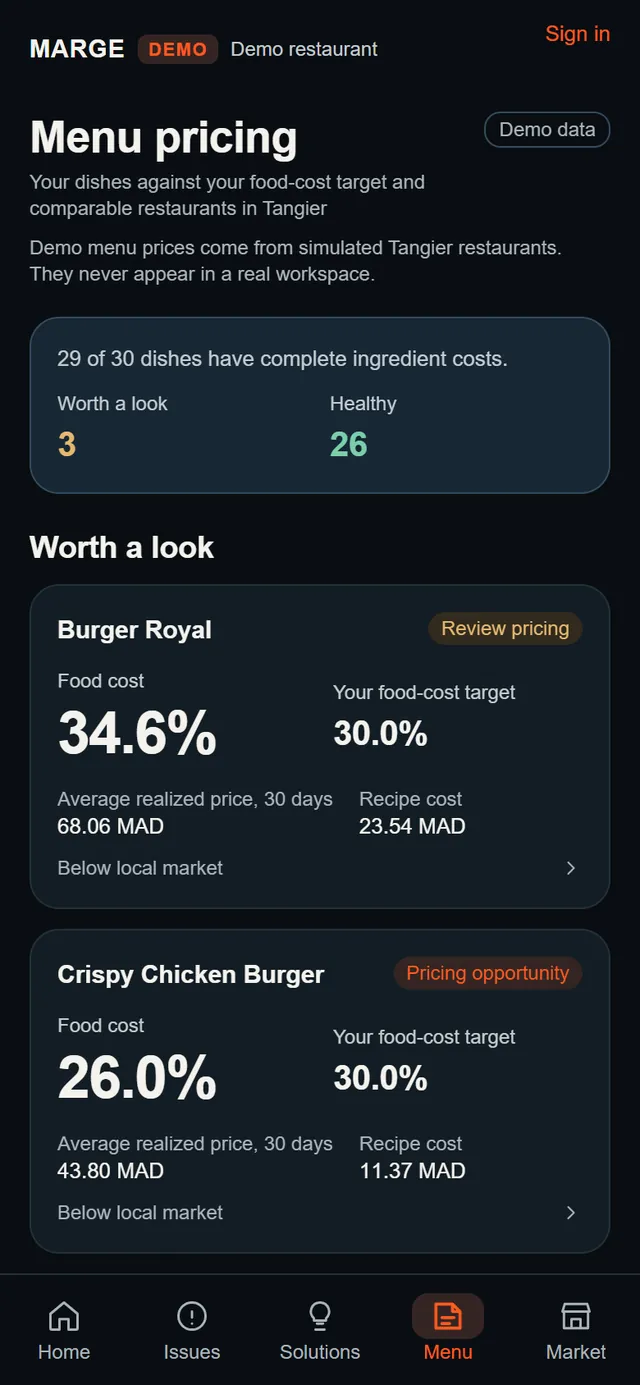
Every dish is costed from its recipe and the latest invoice prices, then compared with the owner’s food-cost target and with comparable local menus. Dishes are sorted into “worth a look” and “healthy”, with the realized selling price — not just the list price — behind each number.
Purchasing & recommendations
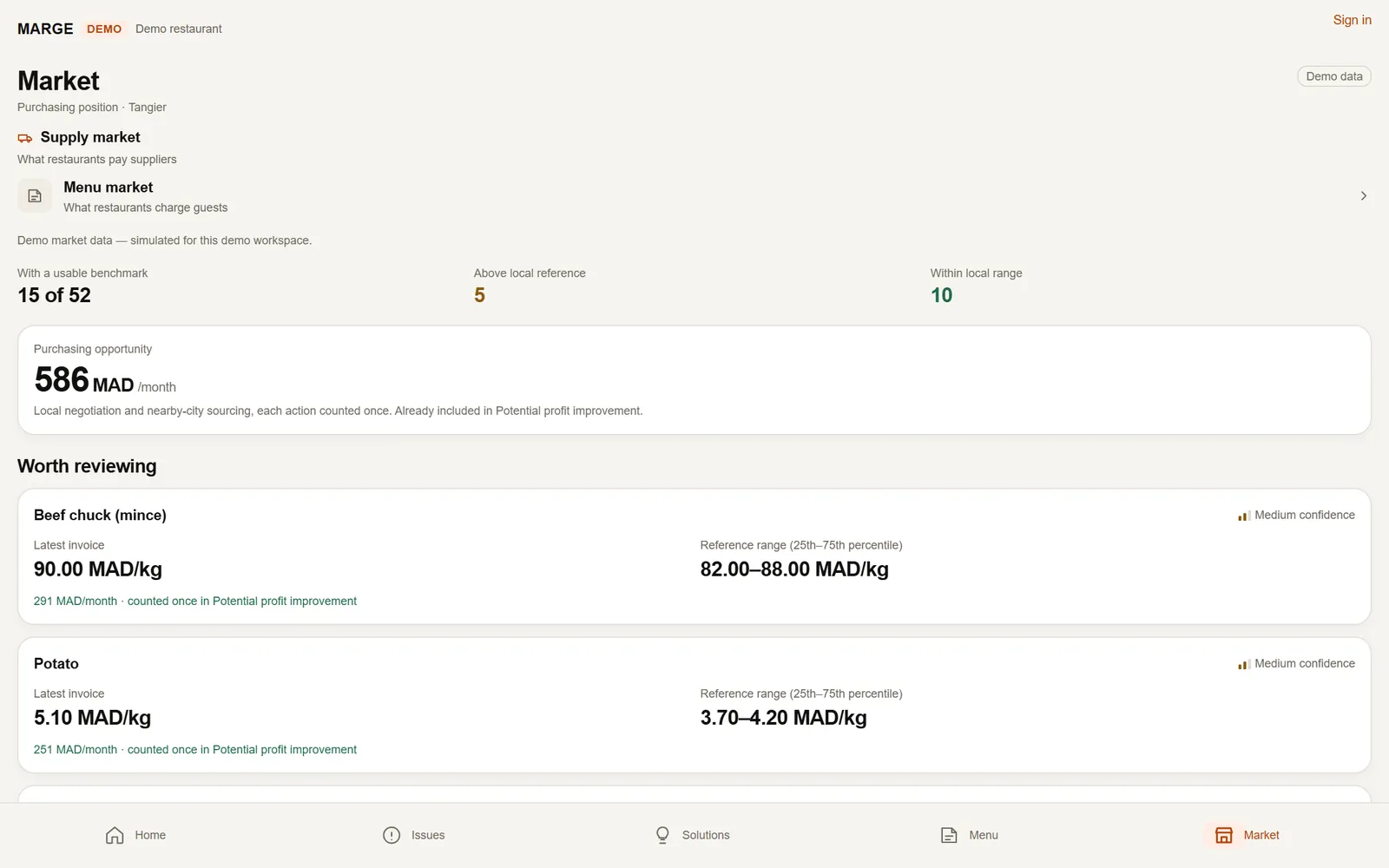
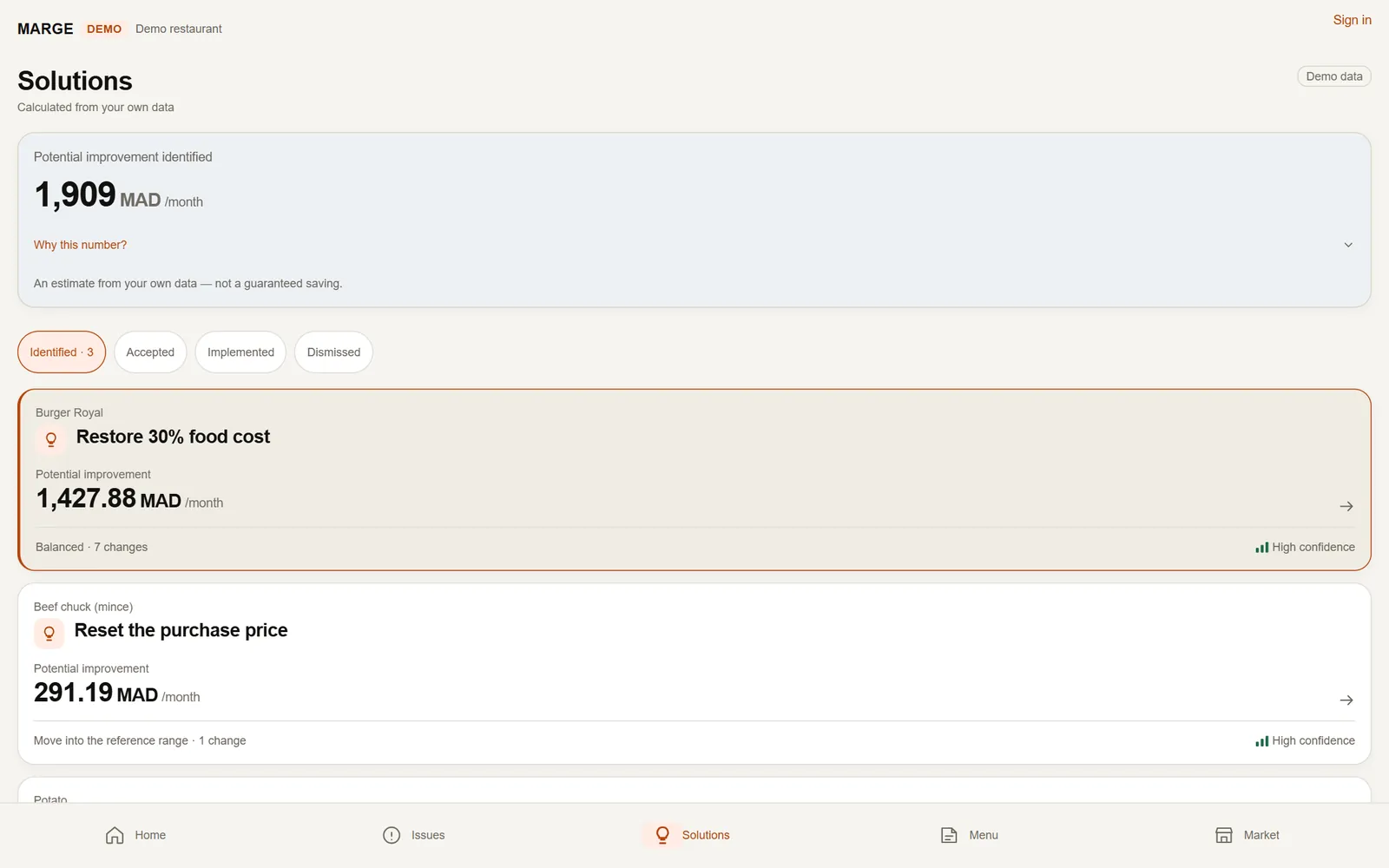
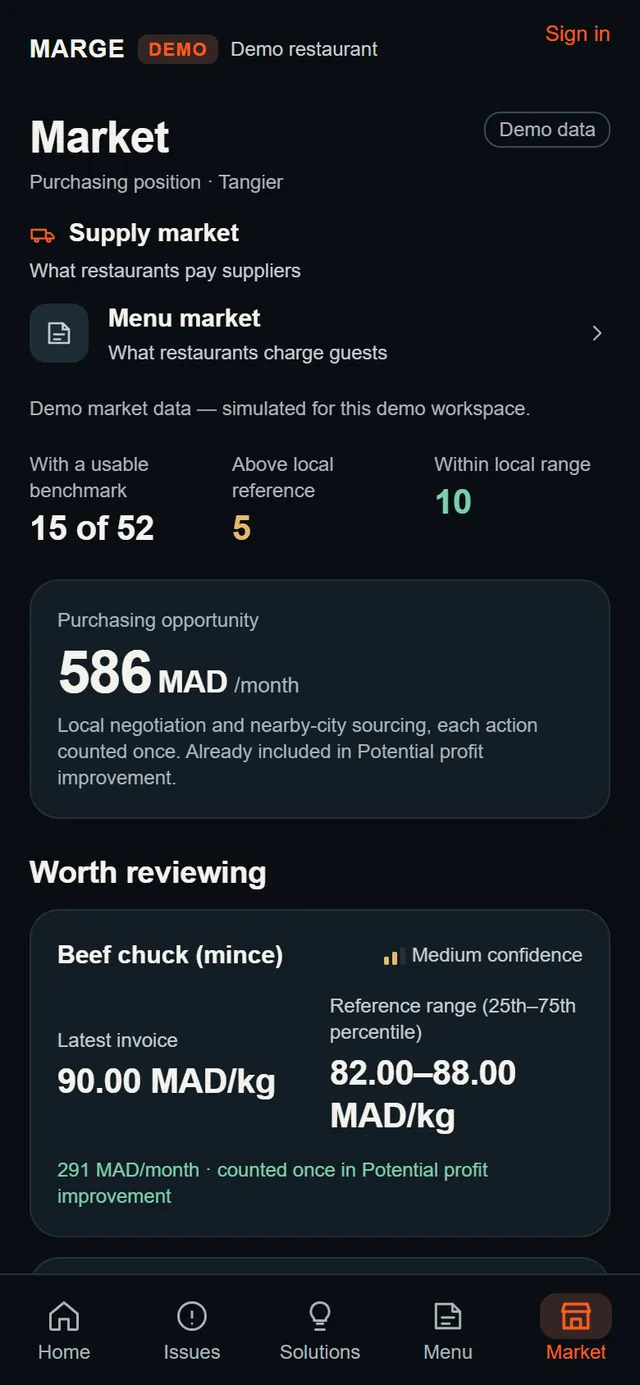
The market view compares what the restaurant pays with a local reference range for each ingredient, and every saving it suggests is counted once in the overall estimate. Recommendations come with their calculation, a confidence level and what the guest would notice — accepting a plan is never counted as money saved.
Built for the kitchen and the office
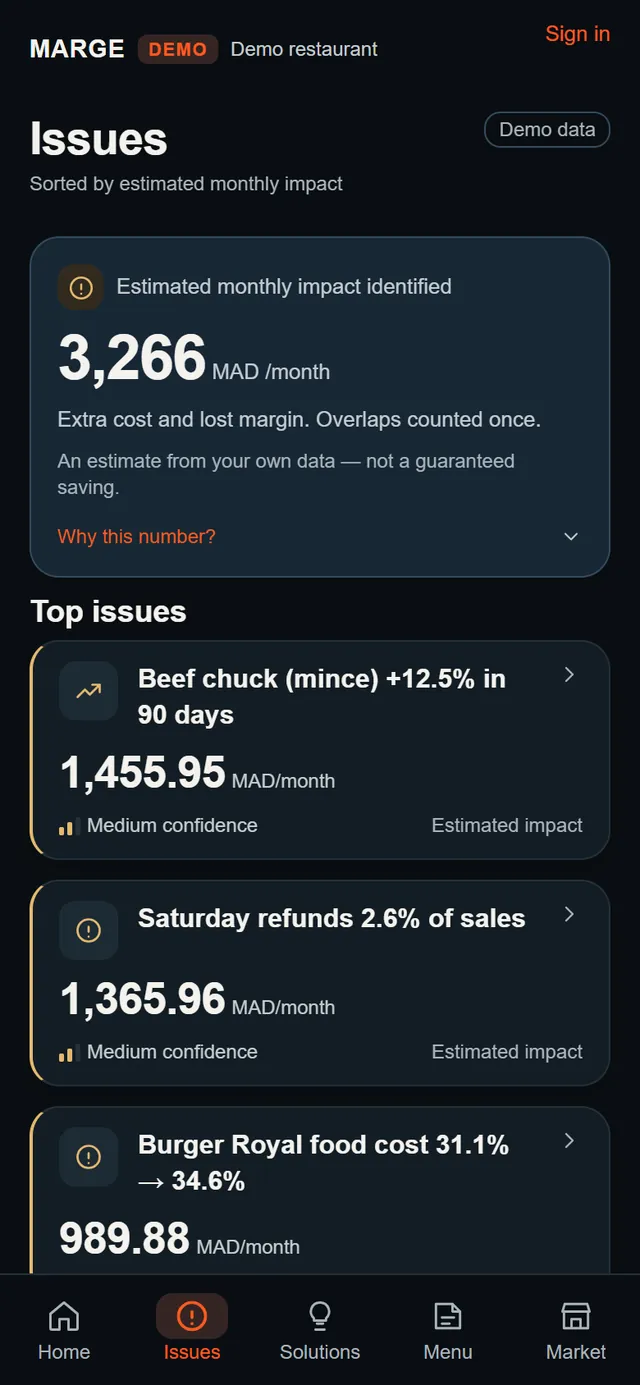
One codebase runs in the browser and on phones. On a laptop the light theme gives room to evidence tables; on a phone the dark theme keeps figures legible during service.
Engineering
Imported sales and purchase files are mapped, validated and normalised before they’re stored; each restaurant’s data is scoped to its own workspace and protected by row-level security in PostgreSQL. Issues and recommendations are regenerated from those normalised records by a calculation engine, so every answer can be traced back to the rows behind it.
Honest notes
- TypeScript
- Expo / React Native
- React Native Web
- Supabase (PostgreSQL)
- TanStack Query
- Zustand